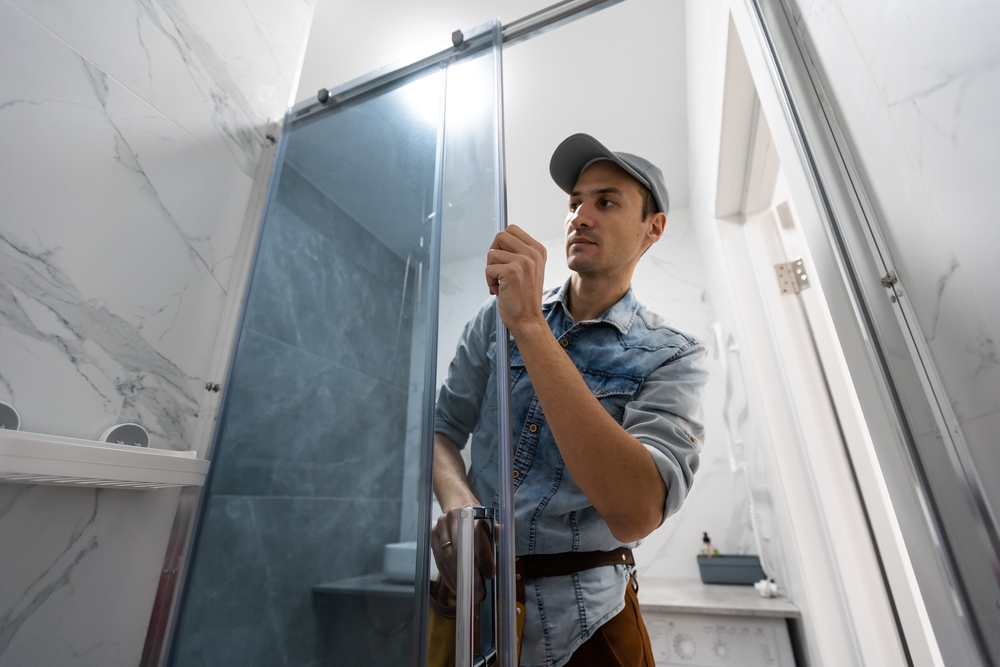
There’s a particular kind of frustration that comes from a shower door that no longer behaves the way it should. One day it glides shut with a satisfying click, and the next it’s scraping across the tile, sticking halfway, or refusing to seal entirely. If you’ve noticed your frameless shower door dragging or not closing properly, you’re not alone. This is one of the most common issues homeowners face, and the good news is that most causes are identifiable and fixable.
Understanding what’s happening behind that beautiful pane of glass is the first step toward getting it working smoothly again.
The Hidden Weight Problem Behind Frameless Designs
Frameless shower doors are stunning, but their elegance comes with a structural reality that framed doors simply don’t have to deal with. A standard frameless glass panel can weigh anywhere from 75 to over 100 pounds, and all of that weight hangs from just two or three hinges mounted to either a wall stud or an adjacent glass panel. Over time, gravity does what gravity always does. It pulls.
This constant downward pressure can cause the hinges to shift ever so slightly, the screws to loosen, or the glass itself to settle out of plumb. When that happens, the bottom corner of the door starts to dip, and suddenly you have a glass door dragging on tile every time you try to open or close it. The sound alone is enough to make any homeowner cringe, but the bigger concern is that continued dragging can chip the tile, scratch the glass edge, or wear down the hinge mechanism even faster. Catching this early is the key to avoiding more expensive frameless shower door repair down the road.
Hinge Wear, Misalignment, and Loose Hardware
The hinges on a frameless shower door are precision components. They’re designed to hold significant weight while still allowing smooth, fluid movement, and they rely on internal cams, washers, and gaskets to do their job. When any of these small parts wear out or shift, the door’s behavior changes immediately.
Loose mounting screws are the most frequent culprit. Daily use creates micro-vibrations that gradually back screws out of their seated position, especially if the hinges were originally mounted into drywall anchors rather than solid blocking. Once the screws lose their grip, the entire door can sag, twist, or pull away from the wall slightly. A proper shower door hinge adjustment can often resolve the issue if the hardware itself is still in good condition. This typically involves removing the hinge cover caps, tightening the set screws in a specific sequence, and sometimes adjusting the cam mechanism to lift the door back into its original position.
If the hinges themselves are corroded, stripped, or worn beyond adjustment, replacement becomes necessary. Carrollton’s hard water can accelerate corrosion on chrome and brushed nickel finishes, and once moisture penetrates the hinge body, the internal components rarely survive long. A professional can usually tell within minutes whether your hinges need adjustment or full replacement.
Settling, Shifting, and the Bathroom Itself
Sometimes the problem isn’t really with the door at all. Houses move. Foundations settle, framing shifts with seasonal humidity changes, and tile floors can develop subtle dips or rises over the years. A shower door that was perfectly aligned during installation can fall out of square simply because the surrounding structure has changed around it.
This is particularly common in older Carrollton homes and in newer construction during the first couple of years after the house is built. Even a quarter-inch of movement in the wall the hinges are mounted to can throw off the door’s swing path entirely. You might notice the door swings open on its own, refuses to stay closed, or only drags in one specific spot rather than along its entire arc.
Diagnosing this kind of issue requires checking the door against the curb, the threshold, and the adjacent glass panel using a level and a careful eye. A proper shower door alignment fix in these cases might involve shimming the hinges, replacing the strike plate or magnetic catch, or in more serious situations, repositioning the hinges entirely to accommodate the new geometry of the opening. It’s not always a quick fix, but it’s almost always solvable without replacing the entire enclosure.
Seal, Sweep, and Gasket Issues That Mimic Bigger Problems
Not every closing problem is a hinge problem. Sometimes the door isn’t actually dragging at all. It just feels like it is because the seals, sweeps, or gaskets along the bottom and sides have hardened, swollen, or come loose. The clear vinyl strip along the bottom edge of your door, called a sweep, takes a beating from daily water exposure, soap residue, and cleaning chemicals. Over time, it can stiffen, warp, or detach from the glass.
When a sweep gets distorted, it can catch on the threshold or curb, creating that telltale dragging sensation even though the door itself is perfectly aligned. Side gaskets that compress against the wall or adjacent panel can also harden and prevent the door from closing flush, leaving you with gaps that let water escape onto the bathroom floor.
The good news is that sweeps and gaskets are inexpensive and relatively easy to replace. The challenge is identifying the correct profile and size, since frameless shower door manufacturers use dozens of slightly different shapes, and the wrong sweep can actually make the problem worse. If you’re not sure what you have, taking a small section of the old sweep to a glass specialist or having a technician evaluate it in person will save you a frustrating trip to the hardware store.
When to DIY and When to Call a Professional
Some frameless shower door issues are absolutely within reach of a confident homeowner. Tightening visible set screws, replacing a worn sweep, cleaning hinge mechanisms with a soft brush and silicone lubricant, and checking for obvious obstructions are all reasonable weekend projects. If your door has only recently started dragging and you can see a clearly loose hinge, a careful adjustment with the right Allen key might solve everything in under ten minutes.
However, there are situations where calling a professional is strongly recommended. Heavy glass panels are dangerous to work with, and improperly adjusted hinges can fail catastrophically, sending tempered glass cascading across your bathroom in thousands of pieces. If the door has shifted significantly, if the glass shows any chips or cracks near the hinge mounting points, if the hinges feel loose in the wall rather than just on the door, or if you’ve already tried tightening things without improvement, it’s time to bring in someone who specializes in frameless shower door repair. In Carrollton, there are several reputable glass and shower door companies that handle adjustments, hinge replacements, and full realignments without requiring you to replace the entire enclosure.
A professional evaluation is also worthwhile if you’re not sure what’s causing the problem. What looks like a hinge issue might actually be a settled wall, and what feels like dragging might really be a swollen sweep. Getting the diagnosis right the first time saves money and prevents the kind of trial-and-error fixes that can damage the glass.
Conclusion
A dragging or improperly closing frameless shower door is almost always fixable, and rarely requires replacing the entire enclosure. Whether the cause is a loose hinge, a worn sweep, a settled wall, or simple wear and tear, identifying the issue early protects both your investment and your bathroom. When in doubt, a quick consultation with a Carrollton shower door specialist can restore that smooth, silent close you remember from day one.
Need a Glass Company in Texas?
Reflection Glass is a premier glass company specializing in residential and commercial glass solutions. We offer an extensive range of services to enhance the beauty and functionality of any space. For residential projects, we provide high-quality shower doors in various styles and finishes, along with door collections that elevate the aesthetics of homes. Our glass hardware options perfectly complement your design choices, ensuring seamless integration. With customizable shower door glass, we bring luxury and personalization to your bathroom. In addition, we cater to commercial properties with interior glass solutions for partitions and dividers, as well as exterior glass needs, including storefront windows and glass facades. Contact us today to learn more about what we can do for you!
Whether you are in Carrollton, TX, or anywhere else across the country, home gym mirror installation is a project that requires careful planning, the right materials, and a commitment to safety. Large mirrors can completely change the feel of a workout space, making it look bigger and helping you monitor your form during exercise. However, without proper installation, these same mirrors can pose a serious risk. Here is what you need to know to get it done right.
1. Choose the Right Mirror for Your Space
Not all mirrors are created equal, and when it comes to a home gym, size and construction both matter. Custom wall mirrors designed for fitness spaces are typically larger and heavier than standard household mirrors, which means the demands placed on your wall structure are significantly higher.
Before purchasing, you need to assess your wall type. Drywall, concrete, and wood-paneled walls each require different hardware and anchoring methods. For a home gym, you generally want mirrors that are at least one-quarter inch thick to provide durability during high-activity environments. Thinner glass is more prone to vibration damage and cracking, especially if you are doing high-impact exercises nearby.
Also consider the shape and configuration. Some homeowners prefer one long continuous mirror spanning an entire wall, while others opt for a series of panels arranged side by side. Both approaches can work beautifully, but each comes with its own installation challenges. Large vanity mirrors and full-wall panels will require more anchor points and more structural support than smaller individual pieces.
If you are based in Carrollton, TX, working with a local mirror supplier who understands regional building materials and humidity levels can be a genuine advantage. Heat and moisture fluctuations in Texas can affect adhesive performance over time, so local knowledge matters.
2. Always Use Mirror Safety Backing
One of the most overlooked but critically important steps in home gym mirror installation is applying mirror safety backing. This is a protective film or laminate applied to the back surface of the mirror. In the event that a mirror cracks or shatters, safety backing holds the broken pieces together rather than allowing sharp shards to scatter across the floor.
In a home gym environment, the stakes are especially high. You or a family member could be exercising right next to the mirror when an accident occurs. A mirror without safety backing can become a serious hazard in an instant. Mirror safety backing is a non-negotiable feature for any professional installer and should be a firm requirement any time you are sourcing custom wall mirrors for a fitness space.
Some mirror manufacturers include this backing as a standard feature, while others offer it as an add-on. When shopping for large vanity mirrors or gym panels, always ask specifically whether safety backing is included. If you are purchasing through a local Carrollton, TX supplier or a specialty glass company, request that this feature be clearly documented before any installation begins.
Beyond safety backing, you should also look into tempered or laminated glass options. These types of glass are engineered to be more impact-resistant than standard float glass and provide an additional layer of protection in active environments.
3. Understand Your Wall Structure Before Mounting
Proper professional mirror mounting starts long before a single screw is driven into the wall. Understanding what lies behind your drywall is essential to ensuring the mirrors stay in place safely over the long term.
The most secure method of mounting heavy mirrors is to anchor them directly into wall studs. Studs are the vertical wooden or metal framing members inside your walls, and they provide the load-bearing support needed to hold substantial weight. Standard studs are typically spaced 16 inches apart, though this varies by construction type. Using a reliable stud finder before any installation is a step that should never be skipped.
If your desired mirror placement does not align with stud locations, you will need to use heavy-duty wall anchors rated for the weight of your specific mirror. Toggle bolts and snap toggles are common choices for drywall applications, but you should always verify that the anchor’s weight rating exceeds the mirror’s actual weight by a comfortable margin.
For very large custom wall mirrors, some installers prefer to mount a horizontal ledger board along the base of the wall first. This board bears the weight of the mirror from below while the top of the mirror is secured to studs or anchored into the wall. This method distributes the load more evenly and significantly reduces the risk of the mirror pulling away from the wall over time.
In Carrollton, TX, where both older and newer construction styles are common, the underlying wall material can vary considerably from home to home. When in doubt, consult a professional before proceeding.
4. Use the Right Hardware and Adhesives
Even with studs located and safety backing applied, using the wrong mounting hardware can compromise the entire installation. For home gym mirror installation, you want to use hardware specifically rated for glass and mirror applications.
J-channel clips and Z-clips are commonly used in professional mirror mounting. These metal clips grip the edges of the mirror and transfer the load to the wall anchors rather than putting stress on the glass itself. When properly installed, they allow slight movement without loosening, which is important in active spaces where vibration is common.
Mirror mastic adhesive is another tool used by professionals. This is a specialized adhesive designed to bond mirrors to walls without damaging the reflective silver backing on the mirror’s surface. Standard construction adhesives and silicone caulks can contain solvents that degrade mirror backing over time, causing dark spots and deterioration. Always verify that any adhesive used is specifically labeled as mirror-safe.
For large vanity mirrors and full gym panels, using a combination of mechanical clips and mastic adhesive provides the greatest level of security. The adhesive holds the mirror flush against the wall while the clips provide additional mechanical support. Relying on adhesive alone is not recommended for mirrors over a certain size and weight.
Hardware stores and specialty glass suppliers in Carrollton, TX, and across the Dallas-Fort Worth area typically carry the appropriate materials, but if you are uncertain about specifications, a professional installer can source the right components for your project.
5. Know When to Call a Professional
There is no shame in recognizing that large-scale mirror installation is a job best handled by experienced professionals. Custom wall mirrors for a home gym can weigh hundreds of pounds depending on the configuration, and a single mistake in the installation process can result in property damage or serious injury.
Professional mirror mounting services bring expertise, proper tools, and liability coverage to the job. They know how to assess wall conditions, select appropriate hardware, apply safety backing correctly, and ensure that every panel is level and secure. The cost of hiring a professional is modest compared to the potential cost of a mirror falling, damaging your floor, or injuring someone in your household.
In Carrollton, TX, and the broader DFW metro area, there are reputable mirror and glass installation companies that specialize in residential gym projects. Getting multiple quotes and checking reviews before choosing a contractor is always a smart approach.
Conclusion
Installing large custom wall mirrors in your home gym is one of the most rewarding upgrades you can make to your fitness space, but it demands careful attention to safety at every step. From choosing mirrors with proper safety backing to using the correct hardware and knowing when to call in a professional, each decision contributes to an installation that is both beautiful and secure. Whether you are planning a project in Carrollton, TX, or anywhere else, taking these precautions seriously will protect your home, your mirrors, and most importantly, the people using the space.
Need a Glass Company in Texas?
Reflection Glass is a premier glass company specializing in residential and commercial glass solutions. We offer an extensive range of services to enhance the beauty and functionality of any space. For residential projects, we provide high-quality shower doors in various styles and finishes, along with door collections that elevate the aesthetics of homes. Our glass hardware options perfectly complement your design choices, ensuring seamless integration. With customizable shower door glass, we bring luxury and personalization to your bathroom. In addition, we cater to commercial properties with interior glass solutions for partitions and dividers, as well as exterior glass needs, including storefront windows and glass facades. Contact us today to learn more about what we can do for you!
When it comes to replacing glass in your home, the choices can feel overwhelming. Two of the most common options homeowners encounter are tempered and laminated glass, and understanding the difference between them is essential before making any investment. Whether you are upgrading a patio door, a bathroom enclosure, or a large picture window, choosing the right type of safety glass can affect everything from your family’s protection to your energy bills.
This guide will walk you through the key differences, applications, and considerations so you can make a confident, informed decision.
What Is Tempered Glass and How Is It Made?
Tempered glass is produced through a process of extreme heating and rapid cooling, which dramatically increases its strength compared to standard annealed glass. The result is a product that is roughly four to five times stronger than ordinary glass of the same thickness. This manufacturing process also changes the way the glass behaves when it breaks. Instead of shattering into large, jagged shards that can cause serious lacerations, tempered glass crumbles into small, relatively blunt pebbles. This characteristic is precisely why it is classified as a safety glass for doors, shower enclosures, and other high-traffic areas in residential settings.
Because of its strength and breakage pattern, tempered glass has become a standard requirement in many parts of the home. Building codes in the United States typically mandate its use in shower and tub enclosures, glass near staircases, sidelights around entry doors, and any glazing installed close to floor level. Homeowners replacing glass in these locations will almost always find that tempered glass is not just a good choice, it is a required one under residential glass safety standards.
One important limitation to understand is that tempered glass cannot be cut or drilled after it has been processed. Any customization, such as size adjustments or hole placement for hardware, must be completed before the tempering process begins. This means accurate measurements and planning are critical before ordering.
What Is Laminated Glass and How Does It Differ?
Laminated glass takes a fundamentally different approach to safety. Rather than relying on a thermal treatment to change the physical structure of the glass itself, laminated glass sandwiches one or more layers of a flexible plastic interlayer, typically polyvinyl butyral (PVB), between two or more panes of glass. When the glass is struck and breaks, the interlayer holds the broken pieces in place, preventing them from falling or flying outward.
This “holds together” quality gives laminated glass a distinct advantage in certain applications. It is the same technology used in automotive windshields, and it provides meaningful resistance against forced entry, severe weather, and even sound transmission. Because the broken pieces remain bonded to the plastic layer, an intruder would have to work significantly harder to create an opening, making laminated glass a popular choice for ground-floor windows, skylights, and any glazing in high-risk security areas.
In the context of tempered glass vs laminated glass, the two products solve different problems. Tempered glass is designed to break safely when the force threshold is exceeded. Laminated glass is designed to stay intact and hold together even after breaking. Both are legitimate forms of safety glass, but the right choice depends heavily on what threat or concern you are addressing.
Which Applications Call for Tempered Glass in Your Home?
Tempered glass is the go-to option for interior applications where the primary concern is accidental human impact. Glass shower doors, glass interior railings, glass tabletops, and frameless glass partitions all benefit from tempered glass because the risk of someone falling into or bumping the surface is relatively high. If a breakage does occur, the small, rounded fragments significantly reduce the risk of a serious cut or puncture wound.
Entry door sidelights and glass panels within 24 inches of a door opening are another primary application. These areas are prone to accidental contact, especially when someone reaches for a door handle or stumbles near the entrance. Residential glass safety standards, as outlined in the International Residential Code (IRC), specifically address these zones and require safety glazing materials, which includes both tempered and laminated options depending on the context.
Glass doors leading to patios and backyards, including sliding glass doors, are almost universally glazed with tempered glass. The combination of heavy foot traffic, children playing nearby, and the potential for someone to walk directly into the glass panel makes tempered glass the sensible standard. For homeowners in Palm Springs and similar desert communities, where indoor-outdoor living is central to the lifestyle, well-chosen patio door glass is especially important.
When Does Laminated Glass Make More Sense?
There are several scenarios where laminated glass outperforms tempered glass and becomes the clearly superior choice. The first is overhead or sloped glazing. Skylights and roof windows are almost always required by code to use laminated glass because if the glass breaks, the interlayer prevents broken pieces from falling onto people below. A tempered glass skylight, by contrast, would crumble into a shower of small fragments that could still cause harm and would create an immediate weather opening.
The second scenario involves hurricane or storm resistance. In areas prone to high winds and flying debris, laminated glass provides a level of protection that tempered glass simply cannot match. When tempered glass breaks, it is gone entirely. When laminated glass breaks under storm conditions, the pane may crack and deform, but it generally stays in the frame, maintaining a barrier against wind, rain, and further debris.
Security is the third major use case. For ground-floor windows facing the street or other vulnerable areas, laminated glass adds meaningful resistance against break-ins. Smashing through a laminated pane requires repeated strikes and sustained effort, which dramatically increases the time and noise involved in a forced entry attempt. For homeowners who travel frequently or want additional peace of mind, this is a compelling reason to specify laminated glass during a window replacement project.
Sound attenuation is a fourth consideration. The PVB interlayer in laminated glass is particularly effective at dampening sound transmission, making it a smart choice for bedrooms or home offices facing a busy road or noisy neighborhood.
How Do Cost, Maintenance, and Code Requirements Factor In?
From a cost perspective, laminated glass is generally more expensive than tempered glass of comparable thickness. The additional materials and manufacturing steps involved in bonding the interlayer add to the price, and this difference can become significant when you are replacing multiple windows or large glass panels throughout a home. Tempered glass remains the more budget-friendly safety glass option for standard interior applications.
In terms of maintenance, both products are relatively straightforward to care for. Standard glass cleaners work well on both surfaces, and neither requires special coatings or treatments to maintain their safety properties over time. However, once either type of glass is broken, it must be replaced entirely. There is no repair option for either tempered or laminated glass once the structural integrity has been compromised.
Code compliance is a factor that often makes the decision for homeowners before personal preference even enters the picture. Consulting with a licensed glazing contractor or checking with your local building department before ordering replacement glass is always a worthwhile step. Codes vary by state, municipality, and specific application, and installing the wrong type of glass, even with good intentions, can create liability issues during a home sale or insurance claim.
Conclusion
Choosing between tempered glass vs laminated glass ultimately comes down to where the glass will be installed and what risks you are trying to manage. Tempered glass excels in interior applications where accidental impact is the primary concern, while laminated glass shines in overhead, exterior, security, and weather-related scenarios. Both products meet residential glass safety standards when used appropriately, and both represent a meaningful upgrade over standard glass. When in doubt, work with a qualified glass professional who can assess your specific situation and recommend the right safety glass for doors, windows, and other openings throughout your home.
Need a Glass Company in Texas?
Reflection Glass is a premier glass company specializing in residential and commercial glass solutions. We offer an extensive range of services to enhance the beauty and functionality of any space. For residential projects, we provide high-quality shower doors in various styles and finishes, along with door collections that elevate the aesthetics of homes. Our glass hardware options perfectly complement your design choices, ensuring seamless integration. With customizable shower door glass, we bring luxury and personalization to your bathroom. In addition, we cater to commercial properties with interior glass solutions for partitions and dividers, as well as exterior glass needs, including storefront windows and glass facades. Contact us today to learn more about what we can do for you!
Hard water stains on glass shower doors can be stubborn and unsightly. These marks often appear as cloudy patches or chalky white spots that cling to the glass and resist basic cleaning efforts. Many homeowners struggle with this problem and may not realize there are effective solutions for both removing the stains and preventing them from returning. In this blog, we will explore how to tackle permanent hard water stains, restore clarity to your shower glass, and protect your investment with proactive care.
What Causes Hard Water Stains?
Hard water contains a high concentration of minerals, primarily calcium and magnesium. When this water evaporates on a surface, it leaves mineral deposits behind. On glass shower doors, these minerals dry and harden over time, forming what is commonly referred to as hard water stains. If untreated, they can etch into the glass surface and become more difficult to remove.
These stains often appear as dull or milky patches that cloud the surface and obscure transparency. The longer they are left in place, the more challenging it becomes to eliminate them completely. Standard glass cleaners may remove surface grime but typically have little effect on mineral buildup. Once hard water stains have become embedded in the glass, a more specialized approach is necessary to restore the clarity of the door.
The Most Effective Hard Water Stain Removal Methods
The severity of hard water stains determines the level of treatment required. For mild stains, a homemade solution of vinegar and baking soda may be enough to break down the minerals and gently polish the glass. The acidic nature of vinegar helps dissolve calcium deposits while baking soda acts as a mild abrasive. This method requires some elbow grease, consistent application, and patience.
For more persistent stains, stronger cleaning agents may be necessary. Products formulated specifically for hard water stain removal can penetrate mineral layers and restore the glass to a like-new condition. These typically contain hydrochloric acid or other active ingredients that react with calcium and magnesium deposits. Always follow product instructions carefully and wear gloves when using these stronger cleaners.
In extreme cases, especially where the glass has become etched, physical polishing with a fine abrasive pad or glass polishing compound may be required. This method can help smooth out micro-abrasions and improve clarity, although it should be approached cautiously to avoid damaging the glass. A professional cleaning or restoration service can offer deeper cleaning for glass that has suffered from long-term neglect.
Cloudy Shower Glass Fix: Restoring Clarity Step by Step
If your shower doors have become cloudy from hard water buildup, the restoration process begins with a thorough assessment. Determine whether the cloudiness is due to surface residue or if the minerals have etched into the glass. Surface-level haze is much easier to remove, while deeper damage may only be improved with professional tools or replacement.
Start by applying a generous amount of distilled white vinegar to the affected area. Let it sit for at least 15 minutes to soften the mineral deposits. Then, scrub the glass with a non-scratch pad using circular motions. Rinse with warm water and inspect the glass. Repeat this process as necessary until the residue loosens.
For more stubborn areas, consider using a cleaner specifically labeled for hard water stain removal. Apply the cleaner to the glass, allow it to work for the recommended time, then gently scrub and rinse. With multiple applications, even long-standing stains can be significantly reduced.
If cloudiness persists after cleaning, this may indicate damage to the surface of the glass. In these cases, the only effective cloudy shower glass fix might be polishing with a cerium oxide compound or replacing the door entirely if clarity cannot be restored.
Preventing Future Stains with ClearShield Glass Protection
Once your shower doors are clean, it is vital to protect them from future damage. One of the best ways to do this is by applying a protective coating such as ClearShield. This product creates a durable, invisible layer on the glass that repels water, soap scum, and mineral buildup.
ClearShield works by transforming ordinary glass into a non-stick surface that is resistant to corrosion and staining. When applied correctly, it can reduce cleaning time and keep your shower doors looking clear and bright for months or even years, depending on usage.
This type of glass protection is especially useful in homes with hard water, where mineral deposits are a constant issue. Regular maintenance becomes much easier, as water and residue simply bead off the surface rather than sticking and drying in place. While some glass may come pre-treated with such coatings, it is possible to apply ClearShield after the fact to extend the life of your shower enclosure.
Reapplication may be necessary over time, depending on the frequency of use and cleaning methods. It is important to avoid abrasive cleaners or scrubbing pads, which can wear down the protective layer. Stick to mild, non-acidic cleansers and soft cloths to maintain the coating.
The Importance of Ongoing Shower Door Maintenance
Maintaining the appearance and integrity of your shower glass involves more than just occasional deep cleaning. Consistent, light upkeep can prevent stains from becoming permanent in the first place. A good maintenance routine ensures that your shower door always looks presentable and avoids the expense and frustration of restoration.
After each use, take a moment to dry the glass with a squeegee or microfiber cloth. This simple step prevents water droplets from evaporating and leaving minerals behind. Over time, this habit can significantly reduce the need for harsh cleaners or scraping tools.
In addition to daily drying, clean your shower doors weekly with a mild glass-safe solution. Avoid using products with ammonia or bleach, as they may interact with any protective coatings or damage nearby fixtures. Natural options like vinegar and water are usually safe and effective for regular cleaning.
Inspect the glass every few months for signs of buildup or wear. If you notice water beginning to sheet instead of bead, it may be time to reapply a protective coating. Being proactive with your shower door maintenance can extend its lifespan, improve your bathroom’s appearance, and reduce long-term repair costs.
Conclusion
Removing permanent hard water stains from glass shower doors can be a challenging task, but it is not impossible. With the right tools and techniques, you can restore clarity to even the most stubborn glass surfaces. Begin by identifying the severity of the stains and choose a suitable method for removal, whether that is a natural remedy or a specialized cleaner.
Once your glass is clear, apply a high-quality protective solution like ClearShield to prevent future stains and minimize your maintenance burden. Remember that consistent care is the key to preserving your shower’s pristine appearance. Small daily habits like drying the glass and avoiding harsh chemicals go a long way in extending the life of your shower doors.
Taking time to invest in hard water stain removal and preventative maintenance not only enhances the beauty of your bathroom but also adds value to your home. Keep your shower glass sparkling, and enjoy a clean, fresh space every day.
Need a Glass Company in Texas?
Reflection Glass is a premier glass company specializing in residential and commercial glass solutions. We offer an extensive range of services to enhance the beauty and functionality of any space. For residential projects, we provide high-quality shower doors in various styles and finishes, along with door collections that elevate the aesthetics of homes. Our glass hardware options perfectly complement your design choices, ensuring seamless integration. With customizable shower door glass, we bring luxury and personalization to your bathroom. In addition, we cater to commercial properties with interior glass solutions for partitions and dividers, as well as exterior glass needs, including storefront windows and glass facades. Contact us today to learn more about what we can do for you!
Living in a small space presents a unique set of design challenges. Homeowners often struggle to find ways to open up tight areas without compromising style or function. While knocking down walls may not be feasible, there’s one highly effective and visually appealing solution that has stood the test of time: custom mirror walls. These reflective surfaces go far beyond their utilitarian origins. They are a powerful design tool capable of visually expanding a room, enhancing light, and adding depth in ways few other elements can. With clever placement and modern design approaches, custom mirrors can transform a cramped environment into what feels like a much larger, airier, and more luxurious space.
Interior designers and homeowners alike have long valued mirror installations for their ability to elevate aesthetics while offering practical advantages. When used thoughtfully, mirrors can change the way a room is experienced both physically and emotionally. Whether incorporated as part of a larger mirrored wall design trend or used in targeted areas like bedrooms, living rooms, gyms, or bathrooms, they have the power to redefine spatial perception.
Visual Expansion and the Science of Reflection
At the heart of the mirror wall’s appeal lies a simple scientific principle: reflection. When a mirror reflects the contents of a room, it gives the illusion of duplicated space. This optical trickery can effectively make a room feel twice as large as it really is. In smaller spaces, such as city apartments, basements, or compact home gyms, this visual expansion can significantly impact the room’s comfort and functionality.
Mirrors trick the eye by reflecting not just objects but also the negative space around them. When installed from floor to ceiling or wall to wall, they can appear to double the length or width of a room. This effect is particularly potent when the mirrors are placed opposite windows, as they reflect natural light and views of the outdoors. By bouncing light throughout the room, they make dark corners disappear and create a brighter, more cheerful environment.
Using custom mirror walls strategically on one or more surfaces can guide the eye toward a focal point, creating symmetry and visual harmony. This technique is especially valuable in long narrow hallways, small bedrooms, or home offices where the space can feel closed in. The end result is a room that feels more breathable, welcoming, and balanced.
Light Enhancement and Atmosphere
Lighting is an essential aspect of good interior design. Unfortunately, small rooms often suffer from limited access to natural light or poor artificial lighting plans. One of the key benefits of custom mirror walls is their ability to act as passive light enhancers. They reflect ambient and direct light, effectively amplifying it without additional fixtures or energy consumption.
Whether it’s daylight streaming through a window or the warm glow of an overhead chandelier, a mirror surface can capture and redistribute that light throughout the room. This is particularly advantageous in spaces like bathrooms and powder rooms, where vanity mirror installation plays a dual role of utility and ambiance. A well-placed vanity mirror not only aids in grooming tasks but also bounces light in ways that brighten every corner of the space.
In dining rooms or entryways, mirrored wall panels can elevate the mood by reflecting candlelight, pendant lighting, or decorative sconces, creating a layered lighting effect that feels luxurious. In living rooms, placing a custom mirror behind a central light fixture can give the illusion of a grander, more open space, turning a modest home into one that feels refined and expansive.
Functional Elegance in Home Gyms and Bathrooms
One of the fastest-growing applications of mirrored surfaces is in fitness-focused interiors. Gym mirrors for home use are a practical addition to any workout area, helping users maintain proper form while also enhancing the room’s appearance. Many home gyms are tucked into basements or garages, where space is limited and natural light is scarce. In these cases, large mirror walls serve both function and form. They create the illusion of openness while offering critical visibility during exercise routines.
Beyond fitness, bathroom remodels are another popular use for custom mirrors. Vanity mirror installation has evolved from basic, frameless rectangles to custom-cut, backlit pieces that are as decorative as they are functional. In smaller bathrooms, a mirror wall behind a sink or vanity can make the space feel significantly larger while also providing a clean, polished look. Some designs even incorporate smart technology, adding lighting controls, defogging features, and display functions without sacrificing elegance.
The rise in popularity of these applications speaks to the growing consumer demand for multi-purpose, visually impactful design elements that enhance both daily life and home value. Whether it’s part of a minimalist aesthetic or a more ornate style, mirror walls meet the mark in both practicality and presentation.
Customization and Design Trends
Modern mirrored wall design trends have moved far beyond simple sheets of reflective glass. Today’s custom mirror walls come in a wide array of finishes, shapes, sizes, and configurations, offering endless creative possibilities. From antique finishes and smoked glass to beveled edges and geometric patterns, mirrors can be tailored to suit virtually any interior style.
One trend gaining popularity is the use of mirror tiles arranged in decorative patterns. This approach can add texture and interest while still offering the reflective benefits of a full mirror wall. Some homeowners opt for segmented mirror panels with metal trims for an industrial feel, while others embrace a seamless design that blends into the wall for a more modern, minimalist effect.
Frameless mirror panels are particularly effective in contemporary spaces where clean lines and simplicity are key. Meanwhile, classic interiors might benefit from mirrors with ornate frames or gold accents. Customization allows designers to use mirrors as a focal point or as a subtle enhancement, depending on the desired outcome.
Large-scale installations are no longer reserved for commercial spaces or luxury homes. Thanks to advances in manufacturing and installation techniques, homeowners can now integrate high-quality, custom mirror walls in their living spaces without exceeding their budget. This democratization of design has made mirror walls one of the most accessible and impactful tools for improving spatial quality.
Installation Considerations and Longevity
When planning a custom mirror wall project, professional installation is highly recommended. Large mirrors are heavy and fragile, requiring specialized equipment and techniques to ensure safe and accurate mounting. An experienced installer can help determine the best placement, alignment, and support structure needed to make the mirror secure and visually flawless.
In moisture-prone areas like bathrooms or gyms, it’s important to use moisture-resistant backing materials and sealants to prevent degradation over time. Tempered or laminated glass options provide added safety in case of breakage and are often preferred in homes with children or pets.
Another consideration is how the mirror integrates with other materials in the room. Seamless transitions between mirrors, cabinetry, flooring, and paint can dramatically influence the overall aesthetic. Designers often work closely with contractors and installers to ensure that the mirror complements the space rather than overpowering it.
Maintenance is relatively simple. Mirrors should be cleaned regularly with non-abrasive cleaners to maintain clarity and brilliance. When installed properly and maintained well, custom mirror walls can last for decades while continuing to offer both visual and functional benefits.
Conclusion
Custom mirror walls offer a sophisticated solution for small spaces, providing the illusion of more room while enhancing light, function, and beauty. Whether incorporated as part of a new build or a renovation project, they serve a dual role: they are both design elements and spatial enhancers. With rising interest in personalized home aesthetics, vanity mirror installation and gym mirrors for home use are becoming more commonplace, reflecting a broader trend in mirrored wall design.
As more homeowners seek to balance style with function, custom mirrors offer an ideal way to elevate even the most compact rooms. From cozy bathrooms and home offices to multipurpose workout areas, mirror walls bring a sense of openness and elegance that few other design features can match. With thoughtful planning and professional installation, a single mirrored surface can truly change the way a space feels and functions for years to come.
Need a Glass Company in Texas?
Reflection Glass is a premier glass company specializing in residential and commercial glass solutions. We offer an extensive range of services to enhance the beauty and functionality of any space. For residential projects, we provide high-quality shower doors in various styles and finishes, along with door collections that elevate the aesthetics of homes. Our glass hardware options perfectly complement your design choices, ensuring seamless integration. With customizable shower door glass, we bring luxury and personalization to your bathroom. In addition, we cater to commercial properties with interior glass solutions for partitions and dividers, as well as exterior glass needs, including storefront windows and glass facades. Contact us today to learn more about what we can do for you!